
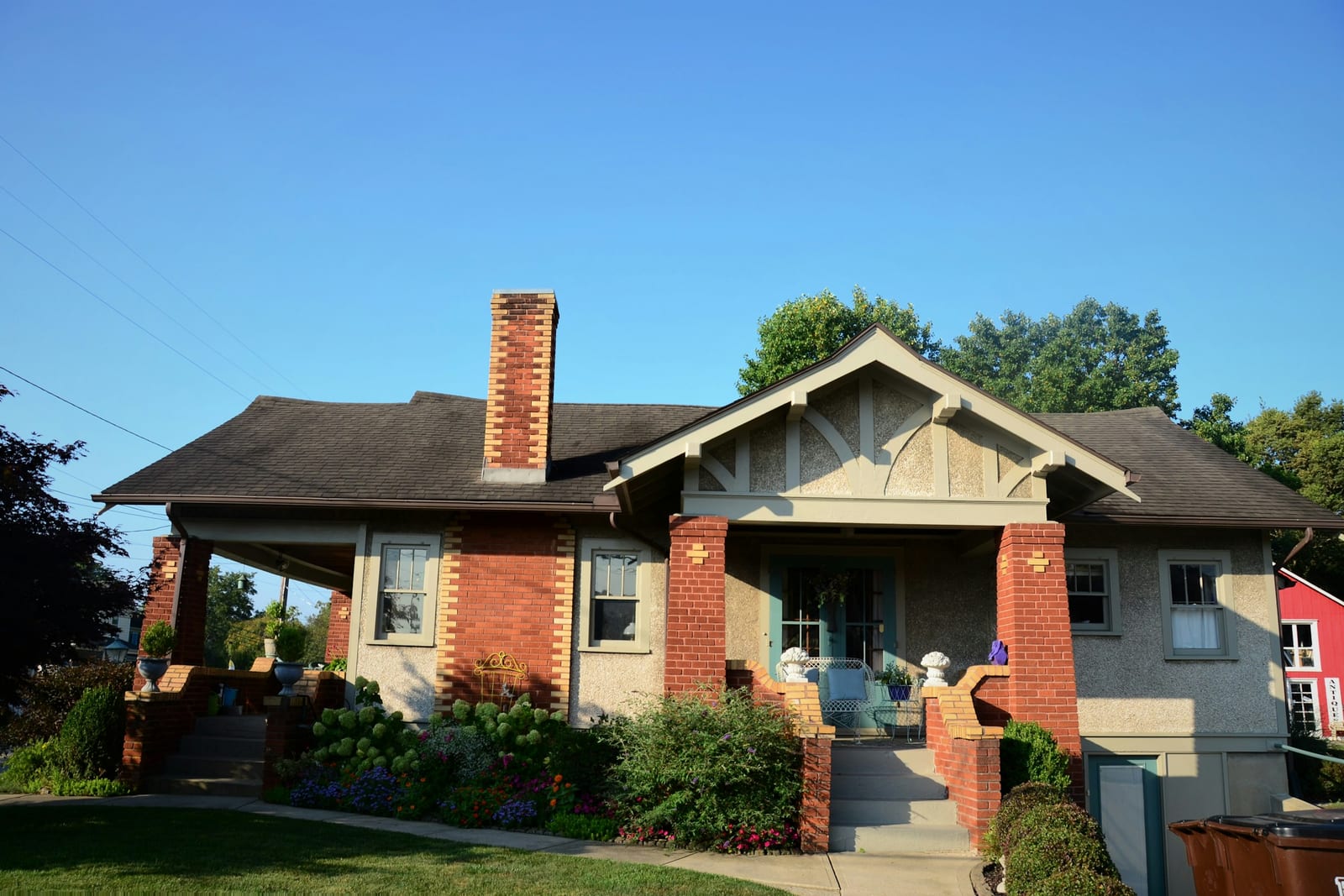
From Bungalow Heaven to the Foothills and the Valley Floor
Dalton Bros Chimney Care is based in Bungalow Heaven, in northeast Pasadena.
Book Before the Alert Season
Send your town and what you burn. We confirm the day and phone back with a time, ideally before November.
the bungalow blocks and period streets of Pasadena
Pasadena
Bungalow Heaven is our own neighborhood, and the Craftsman blocks around it set the pattern for Pasadena work: a brick firebox built for wood, a flue that may never have been lined, and porches a few steps from the next house. We sweep those flues, read what comes out, and fit a sealed insert where an owner wants fires that keep their smoke out of the room.
the foothill streets of Altadena below the San Gabriels
Altadena
North of us, Altadena splits into two kinds of call. Houses that stood through the January 2025 Eaton Fire can hold ash and soot packed into the cap and the flue, and those need a clear flue and an inspection before anyone lights a fire. Families rebuilding get to pick the hearth from scratch, and we lay out how a sealed gas unit or a certified wood appliance compares with an open firebox.
the small foothill city of Sierra Madre
Sierra Madre
Sierra Madre houses are mostly small and close to the street, so on a still night one smoky fire is noticed along the whole block. Many chimneys here were damaged or patched after the 1991 Sierra Madre earthquake, and we look at the flue before talking about an insert or a stove.
the large residential lots of San Marino
San Marino
A San Marino house can run several flues up one stack: a living room fireplace, a library hearth, a second-floor bedroom. We sweep and read each flue separately, and for the fireplaces that sit cold most of the year we talk through a gas log set or a sealed gas insert.
the hillside and canyon-edge homes of La Canada Flintridge
La Canada Flintridge
Up the hill in La Canada Flintridge, a living room fireplace and a den wood stove under one roof is a common pairing, and tall chimneys on sloped lots can be slow to pull on a cold start. We keep the flues clear, size caps so the draft stays open, and service stove gaskets, baffles and catalysts so the stove keeps burning its own smoke.
Glendale from the Verdugo foothills down to the flats
Glendale
Older Glendale neighborhoods keep many original fireplaces with decorative tile around a narrow firebox, and owners want the tile kept and the smoke gone. A sealed insert sized to leave the tile in view, or a gas log set, usually manages both. On the hillsides, tall chimneys get attention to draft and the choice of cap.
the Ventura Freeway suburbs of Agoura Hills
Agoura Hills
A metal fireplace in a framed chase smokes for different reasons than brick does, so we read the unit's label before talking about wood or gas. Agoura Hills grew up right around the switch between the two, so either could be yours.
the close-set neighborhoods of Alhambra
Alhambra
Narrow Alhambra lots can put a chimney a few yards from the next bedroom window, so a clean fire here is partly good manners. Visits lean on dry wood, top-down lighting and insert options. Many older fireboxes are small and shallow, and that limits the insert or log set that will fit.
the ranch streets and newer large homes of Arcadia
Arcadia
Arcadia shows both kinds of hearth: older ranch houses with a masonry wood fireplace, and newer houses that mostly burn gas. The wood fireplaces get sweeps, inspections and a talk about inserts. Gas units get a cleaning and burner service so they burn clean on the nights wood is off.
Little India on Pioneer Boulevard and the streets around it
Artesia
About half of Artesia's households rent, so the person booking may be a landlord asking why a unit fills with smoke. Gas logs added to these postwar chimneys still want a clean burner and a damper that stays open.
Catalina's harbor town in its tight canyon
Avalon
More than half of this town predates 1950, and narrow lots put the next window close to your chimney. Smoke from a slow fire goes straight there, so in Avalon a clean flue and a short, hot burn count for a lot.
Azusa Pacific's town under the San Gabriels
Azusa
A postwar ranch house and a 1970s metal unit give different answers to a smoky room. We work out which one you have in Azusa, then talk through a sweep, a sealed insert or gas.
modest-lot stucco neighborhoods along the Metrolink line
Baldwin Park
On a modest lot, a smoldering fire in a small ranch house soon reaches the neighbors. We clear the flue, test the damper and show how to build a small, hot fire, the simplest fix for smoke on these blocks.
the dense southeast blocks along Atlantic, Gage and Florence
Bell
Renters fill roughly 3 of every 4 Bell homes, so a fireplace here is often a landlord's call. An old bungalow on a narrow lot puts smoke at the next window fast, which is why we start by asking whether it should burn wood at all.
old farm plots along Florence and Garfield avenues
Bell Gardens
Small homes went up on subdivided farmland here in the 1930s, many for Dust Bowl migrants, and postwar houses added brick or block chimneys. With about 8 in 10 households renting, gas logs in a sound flue are often simpler to live with than wood.
the San Gabriel River edge of the southeast basin
Bellflower
Gas logs dropped into an old brick or block chimney still need care: a clean burner, a damper clip and a flue clear of nests. Roughly 6 in 10 Bellflower households rent, so that may fall to an owner between tenants.
from Trousdale Estates down to the Golden Triangle
Beverly Hills
An open hearth in a Trousdale modern and a brick chimney from the 1920s call for different talks. The old flue often suits a sealed insert that keeps smoke out of the room, while the modern one may run cleaner on a gas log set sized to its opening.
the gated foothill roads of Bradbury
Bradbury
With no big tracts here, no two Bradbury fireplaces are likely to match, and nothing can be assumed from the neighbor's. We look at how yours draws, what it burns and whether gas logs came later, then suggest habits that keep smoke outdoors.
the Media District, the Rancho and the streets between
Burbank
Old mortar and quake wear in a brick Burbank chimney can show up as smoke where it should not be. Apartments near the Media District raise a plainer question: does the unit's fireplace draw at all?
gated hill communities around old Calabasas Road
Calabasas
Brick is the exception in a city built mostly since the 1970s, so a Calabasas hearth is more likely a later unit. If you want flame without the smoke smell, clean gas service or a maker-approved change usually gets you there.
old Owensmouth and the ranch tracts around it
Canoga Park
Owensmouth was the name in 1912, before Los Angeles annexed it, so a few bungalow hearths here are much older than the nearby ranch tracts. An old flue that smokes calls for a sweep and a look at the lining, not a new log grate.
the Dominguez Hills side of the South Bay
Carson
Three in four Carson households own, so choices about the hearth stay with the person breathing the smoke. Tract fireplaces left idle collect debris; we clear that, check the damper and talk through wood or gas.
the auto square and mall city of the southeast basin
Cerritos
Half of Cerritos was built by 1974, about when metal fireplaces began replacing brick. A factory-built unit has its own rules for fuel, doors and flue parts, so we check what the label allows before any talk of inserts or gas.
the college town under Padua Hills and Claraboya
Claremont
Claremont pairs 1920s to 1940s brick chimneys with hillside homes above them. Old brick may need a sealed insert to burn clean, while a hillside chimney's draft depends on its height and cap, and either can be tuned without losing the hearth.
Rosewood, Bandini and other small residential pockets
Commerce
Houses are a small part of Commerce, and they sit in pockets such as Rosewood and Bandini. For a small bungalow hearth the job starts simply: a sweep, a damper that closes and advice on a fire that does not back up.
Richland Farms and the tract streets around it
Compton
Richland Farms keeps horses and rural zoning inside Compton, and its larger lots give smoke room to clear. On a small stucco ranch lot, a slow fire lingers by the neighbor's window, so burn habits and a clean flue matter more.
the ranch tracts around Citrus Avenue and Covina Park
Covina
Very few Covina homes reach back before 1950, and the building mostly stopped short of 1980. That makes the usual hearth a postwar brick or block chimney, which takes a sealed insert or gas logs well if the flue is sound.
the narrow, deep lots of a tiny southeast city
Cudahy
Cudahy's deep, narrow lots began as small farm plots, so neighbors sit close on each side and smoke drifts straight across. Only about 1 household in 7 owns, which leaves most hearth choices to landlords, and gas logs may be the sensible call.
Harry Culver's bungalow streets and the Fox Hills condos
Culver City
Bungalows came to Harry Culver's 1913 town in the 1920s, and an old firebox can draw poorly once the house around it has been sealed up tight. Fox Hills condos raise another question, since a shared building may limit changes to the hearth.
the ranch-brand suburb at the 57 and 60 junction
Diamond Bar
Diamond Bar's building split evenly around 1980, so brick and factory-built fireplaces may share a street. In The Country's large homes, a big firebox can outrun its flue, and that shows up as smoke in the room.
the aerospace-era suburb that grew from a farm town
Downey
Aerospace work reshaped this old farm town, so Downey's single-story ranch homes are now about seven decades old. A long-idle firebox in one of them often smokes on its opening fire, usually from debris and a cold flue, and both are easy to address.
old citrus land under the San Gabriel foothills
Duarte
Groves gave way to suburbs in the three decades after 1950, so a Duarte house often has a fireplace of that age. In a condo, shared walls limit what can change, and gas service may be the practical route.
the flat central-valley neighborhoods of El Monte
El Monte
El Monte fireplaces are often small and lightly used, and many have gone a long stretch without a sweep. A flue left idle collects nests and debris, which turn the first fire of the year into a smoky room. We clear the flue, check the cap and damper, and leave simple habits that cut the smoke.
Main Street, Smoky Hollow and the blocks by the air base
El Segundo
Detached houses are under 4 in 10 units here, so many El Segundo fireplaces share a building. About a fifth of homes predate 1950, and a hearth that old may need real work on draft before a fire feels pleasant again.
a city of berry-farm roots and card clubs
Gardena
After World War II, tract homes covered the old berry farms, which put brick or block chimneys on many small Gardena lots. Some gained gas logs later, and those still deserve a clear flue and a burner that lights clean.
the old citrus town along Route 66 and Alosta Avenue
Glendora
Mortar wear turns into a smoky draft in the early citrus-town houses around the Village, where brick chimneys may have real age. Elsewhere in Glendora, owners of detached houses can weigh a sealed insert against gas with few shared-wall limits.
the small casino city at Carson and Norwalk
Hawaiian Gardens
More than half of Hawaiian Gardens households rent, so landlords often hold the keys to the hearth. A brick or block flue that once got gas logs needs the same yearly cleaning as one burning wood, even if it stays cleaner inside.
the apartment blocks of a 1922 South Bay city
Hawthorne
Apartments rule in Hawthorne, and about 3 in 4 households rent, so most fireplace questions start with who controls the unit. In one of the detached houses, a sweep and a damper check will show whether smoke trouble is simple or structural.
the Sand Section and walk streets of a small beach city
Hermosa Beach
Small lots and tall rebuilds in the Sand Section can leave an older chimney lower than the roofs beside it, and then wind pushes smoke back down. On a 1.4 square mile beach town, your smoke also reaches someone quickly.
the gated private city of white rail fences
Hidden Hills
Roughly 740 custom homes sit behind Hidden Hills' gates, each with its own hearth, and large fireboxes may struggle with draft if the flue is undersized. We measure, clean and suggest gas or a sealed insert sized to keep the look.
the old streetcar suburb around Pacific Boulevard
Huntington Park
Pacific Electric brought this suburb to life, and about 4 in 10 homes still date from before 1950. Those Spanish Revival cottages may keep a small firebox that smokes easily; a sweep and a smaller fire often cure that without changing the room.
a mainly industrial city with a few residential pockets
Industry
Industry counts only about 210 residents, so home fireplaces are rare here. The few that exist are old, since half the houses date from before 1957, and a sweep plus a damper check is a sensible start for any still lit.
Inglewood under the LAX flight paths
Inglewood
Sound insulation under the LAX approach paths can leave a house sealed tighter than its fireplace expects, and a tight house starves a fire of air. If your Inglewood hearth began smoking after that work, we check draft and damper before anything else.
gravel quarries by Santa Fe Dam, with few homes
Irwindale
Gravel pits, industry and open land take most of Irwindale, and homes are few. About half the houses are newer than 1985, so a given fireplace may be a factory unit or older masonry, and we start by finding out which.
avocado hills along Powder Canyon
La Habra Heights
Edwin Hart developed these hillsides for avocado and citrus about a century ago, and the Spanish houses, ranches and larger custom homes each draw in their own way. Large lots absorb a bit of smoke, but a clean burn still matters to the room itself.
tract streets on former olive and ranch land
La Mirada
Built largely in the 1950s and 1960s, La Mirada has few homes older than 1950 and many owners who stay. A flue from that boom is old enough to need a real look if a fire has started to sulk and fill the room.
old walnut land along Valley and Hacienda
La Puente
Walnut groves became stucco tracts here, and 8 in 10 La Puente homes predate 1980. A fireplace that age burns better after a thorough sweep, a tested damper and a few changes in how you stack and light the wood.
old Lordsburg and the tracts at the valley's east end
La Verne
Lordsburg bungalows near Old Town date to a citrus and Brethren college past, and tract houses came decades later. That spread means a La Verne hearth could be nearly anything, so a damper test and a flue look come ahead of any advice on fuel.
the planned tract city by the San Gabriel River
Lakewood
A fireplace was never a given in Lakewood's tract models, and those that got one now have a chimney about seven decades old. Keeping that one smoke-tight usually means a sweep, a working damper and a crown checked for gaps.
high desert Antelope Valley at about 2,350 feet
Lancaster
Aerospace growth left some Lancaster houses with masonry chimneys, but most homes are newer, with factory-built units and metal flues. Winter here is real, so a tight damper and a clean flue decide whether a fire warms the room or smokes it.
tight lots in the South Bay, beside the 405
Lawndale
Narrow lots put Lawndale's duplexes and modest houses close together, and most households here rent. A fireplace affects people on both sides of a fence, so a hot, short fire and a clear flue count for plenty.
the foot of the Palos Verdes Peninsula
Lomita
Farm land here became ranch houses, apartments and condos during the 1940s to 1970s. Owners of Lomita's detached homes can choose wood, gas or a sealed insert, while a condo has less room to change.
from California Heights and Bluff Park down to Naples
Long Beach
The 1933 quake took down or forced repairs to many older chimneys, so a Long Beach house may have a rebuilt stack sitting on an old firebox. Mismatched parts like those can pull badly, and sweeping and measuring show what is really there.
neighborhoods across the City of Los Angeles
Los Angeles
Across Los Angeles we meet every kind of hearth, from century-old brick fireplaces to factory-built boxes in newer condos. Our order of work stays put: clear the flue, fit a cap that keeps the draft open, then give a straight read on whether an insert, a stove repair or a gas option cuts the most smoke.
where the Century and Long Beach freeways meet
Lynwood
Dairy farmland turned to houses here from the 1920s on, and Lynwood's pre-1950 share runs close to half. Brick that old often leans on a thin lining, and when smoke sneaks into a room, that lining is where we look.
Pepperdine's coast and the canyons behind it
Malibu
Lots rebuilt since the 2018 and 2025 fires commonly went to gas units, so a Malibu hearth may be new and still need burner care. Surviving wood fireplaces raise a different question: a sealed insert or a change to gas before lighting it.
the Sand, Hill and Tree sections and El Porto
Manhattan Beach
Postwar Tree Section houses are often enlarged or rebuilt, and a taller addition can change how an old chimney draws. Smoke backing into a Manhattan Beach living room after a remodel points us to the height of the flue and its cap.
tight blocks beside the Los Angeles River
Maywood
Few places in the county are as densely settled as Maywood, which packs small bungalows onto tight lots, and about 7 in 10 households rent. A smoky fire here becomes everyone's problem, so a sweep and simpler burning are where a visit starts.
the foothill streets and older core of Monrovia
Monrovia
Around the original Monrovia downtown, brick chimneys have lived through several earthquakes, and the foothill houses are more likely to have a wood stove beside the fireplace. Both get swept and inspected. A stove that has started to smoke usually wants new gaskets, a sound baffle or a fresh catalyst.
Montrose and the Crescenta Valley floor
Montrose
Most Montrose houses are modest with one living room fireplace, and plenty of those fireboxes have never been lined. We sweep and inspect them, and if the owner wants a cleaner fire we measure whether a lined insert suits the opening and the flue above it.
postwar stucco streets rising to northern hills
Montebello
Montebello's postwar stucco homes usually carry brick chimneys of the same age, and nothing about them is odd or fragile. A flue kept clean, a damper that seals and dry seasoned wood will solve most complaints about smoke.
the hillside city of Atlantic Boulevard and Garvey Avenue
Monterey Park
Hillside building after World War II gave Monterey Park many chimneys that catch more wind than a flat-lot stack. Draft on a slope depends on cap choice and flue height, and we look at both when a fire smokes on gusty nights.
former dairy farms at the 5 and 605
Norwalk
Farms gave way to Norwalk's tract streets during the 1950s, so most of what stands here is decades old. After seventy years, a modest ranch fireplace rewards simple care: an open flue, a damper that moves freely and a smaller, hotter fire.
the commuter and aerospace suburbs among the Joshua trees
Palmdale
Palmdale boomed from the 1980s on, and older homes are a small minority, so a metal factory-built unit is the likely hearth. Those follow the maker's rules on fuel, and we start there before suggesting doors or logs.
the Art Jury city above Lunada Bay
Palos Verdes Estates
The Palos Verdes Art Jury oversees exterior design, so changing a cap or stack may need its approval. Inside, a sealed insert or gas set can cut smoke in these owner-held homes without touching the outside at all.
the old hay market town around Rosecrans Avenue
Paramount
Hay Tree country turned into postwar single-story houses and apartment complexes, and most households now rent. A brick chimney on a house here is decades old, so before anyone argues about wood or gas, the flue gets swept and checked.
the owner-held tract city where Ford once built cars
Pico Rivera
Half of Pico Rivera's homes went up before 1957, and most households own theirs. Those long-held brick tract hearths can burn clean again with a sweep and better habits, or switch to a sealed insert if smoke keeps bothering the family.
from Lincoln Park and Wilton Heights south to Phillips Ranch
Pomona
A Lincoln Park hearth and a Phillips Ranch fireplace differ in nearly every way, and Pomona holds both. We start by telling you what yours is, then match the fix to it, whether a sweep, an insert or gas.
Portuguese Bend and the peninsula coast
Rancho Palos Verdes
Moving ground around Portuguese Bend has cost some homes their utilities and forced people out, and that movement stresses a masonry chimney in ways nothing else here does. Elsewhere in Rancho Palos Verdes, 1960s stacks mostly want a clean flue and a gas or insert talk.
from North Redondo to Hollywood Riviera and the Village
Redondo Beach
Masonry is common in the older houses here, while condos and townhomes usually run factory gas fireplaces. So a Redondo Beach owner may need a flue swept for wood, while the neighbor needs a burner cleaned, and the visit changes with the hearth.
A.E. Hanson's gated horse-keeping community on the peninsula
Rolling Hills
A.E. Hanson planned this community in the 1930s as gated and rural, and almost every house here is detached and held by its owner. Those older ranch chimneys may suit a sealed insert if you want the fire without the smoke smell.
Crenshaw, Silver Spur and the horse lots of the peninsula
Rolling Hills Estates
Stables and horse-keeping lots still shape parts of this city, and about 8 in 10 homes predate 1980. If your masonry ranch fireplace draws poorly, a sweep and a cap check come ahead of pulling it out for a gas or factory-built unit.
the streets just north of the Whittier Narrows
Rosemead
Rosemead's single-story stucco homes tend to have one brick chimney apiece, and that makes for simple work. We clear it, make sure the damper seals and go over how to keep a small fire from drifting toward a house next door.
the foothill suburb below San Dimas Canyon
San Dimas
San Dimas grew fast from the 1960s through the 1980s, so it has both older masonry and later factory-built fireplaces. Mobile homes and townhomes add other setups again, so the opening question is always what you are burning in, and whether it may burn wood.
the historic core along San Fernando Road and Maclay Avenue
San Fernando
Half of San Fernando's homes predate 1956, and the oldest brick here may carry little reinforcement. That is the type that fails in shaking, so if a fire smokes through cracks we talk about a liner or a change to gas, not more wood.
the old mission town south of Bungalow Heaven
San Gabriel
Growth spread out from Mission San Gabriel from the 1920s on, and about 4 in 10 homes predate 1950. Brick that age may have little reinforcement, and if you like an old fireplace and hate its smoke, a sealed insert sized to the opening keeps both.
Saugus, Valencia, Canyon Country and Newhall, now one city
Santa Clarita
Four communities merged in 1987 to make Santa Clarita, and most of its stucco tract homes hold a factory-built or gas fireplace. A gas unit wants a yearly burner cleaning, and a metal wood unit wants its flue swept and its parts checked for wear.
the oil-boom suburb on Telegraph Road
Santa Fe Springs
Oil money came first, the city in 1957, and most Santa Fe Springs houses around the same years. A chimney from then may just need a thorough clean after a long gap, plus a check of the damper and a word on how to light a fire.
North of Montana through Ocean Park and Sunset Park
Santa Monica
Most Santa Monica households rent, with rent control since 1979, so a fireplace here is often in a unit whose owner decides. North of Montana's larger houses have more options, including a sealed insert that keeps the old mantel in place.
Ventura Boulevard and the streets around the 405 and 101
Sherman Oaks
Built up after World War II, Sherman Oaks has many ranch homes with a single brick chimney that is now decades old. Steel reinforcement helps, but old mortar still lets smoke find its way out, and that is the first thing we look at on a sweep.
the old oil hill above the Long Beach harbor
Signal Hill
Decades of oil drilling delayed houses on this hill, so half of Signal Hill's homes went up after 1980, a late start compared with its Long Beach surroundings. A newer unit here is often factory-built, and it needs its own kind of cleaning and care.
small homes among light industry by Legg Lake
South El Monte
Homes here sit among manufacturing and warehouses on modest lots, and a small ranch fireplace is usually a modest affair. A South El Monte hearth left idle can gather nests and dust, so clearing the flue often solves most of its smoke.
from Hollydale up to the old rancho gate
South Gate
South Gate's housing leans old, with close to half built before 1950, so a chimney here may be plain unreinforced brick. With apartments so close, we pay special attention to drift, helping you burn short and hot or move to gas.
the Arroyo Seco city around Mission Street
South Pasadena
Some South Pasadena brick chimneys predate clay flue liners becoming standard, and an unlined flue is a poor match for a wood fire. Keeping a historic Craftsman's look while stopping the smoke usually comes down to a fitted sealed insert or a gas set.
the residential grid of Temple City
Temple City
Older Temple City ranch houses usually have one masonry fireplace that is seldom lit, and many newer houses burn gas. We sweep and inspect the wood-burners, service the gas units, and help owners decide whether a gas log set or an insert suits a fireplace they rarely use.
Old Torrance and the postwar tracts around it
Torrance
The Olmsted Brothers drew the plan for this 1912 industrial city, and the small early houses of Old Torrance still stand apart from postwar tracts. A brick tract chimney and an old cottage flue can smoke for different reasons, so we sort out which applies.
an industrial city with only a few homes
Vernon
Cold storage, food processing and manufacturing fill Vernon, and only about 330 people live among them. Residential fireplaces are rare, and a home that has one simply needs a basic sweep and a check on whether it should burn at all.
two-story tract streets near Snow Creek Park
Walnut
Most Walnut homes are later than 1980, so metal factory-built fireplaces are common, and they wear differently than brick. Their flues and caps need checks of their own, and a unit that smokes may simply be overdue for a flue cleaning.
valley tracts and the South Hills around Galster Park
West Covina
West Covina holds single-chimney postwar tracts and, by the 1970s, factory-built metal fireplaces, so street by street the hearth changes. South Hills homes add hillside wind to the draft question, and a cap choice may settle it.
courtyard apartments from Harper Avenue to Kings Road
West Hollywood
Only about 1 in 10 units here is a detached house, and 8 in 10 households rent. A West Hollywood courtyard apartment with an old Spanish fireplace may be lovely and unusable, and a sweep plus a talk with the building's owner settle what can burn.
the Conejo side of the county line along Lindero Canyon Road
Westlake Village
Almost nothing here predates 1970, so a Westlake Village fireplace is likely a factory-built unit of about that age or later. Metal parts that old wear out, and a smoky one may need more than a sweep.
Uptown and the Puente Hills neighborhoods above it
Whittier
Uptown's Craftsman bungalows keep some of Whittier's oldest fireplaces, and roughly 30 percent of the city predates 1950. Old narrow fireboxes often pair well with a sealed insert or gas logs, so the look stays and the smoke leaves.
the Oxnard Plain city on old ranch land
Camarillo
Former Camarillo family ranch land became stucco tracts from the 1960s on, so a fireplace here is likely middle-aged and factory-made or simple masonry. In Leisure Village and similar attached homes, a shared wall changes what can be fitted.
the Santa Clara River Valley's citrus and rail town
Fillmore
The 1994 quake hurt this town's downtown badly, homes included, and any older brick still standing could hide old repairs. If a Fillmore fire sends smoke through the wall, we look at the lining before anything else.
the apricot-named city around the college and its zoo
Moorpark
Incorporated in 1983, Moorpark built mostly after that, so many fireplaces here are metal, factory-built and middle-aged. Those flues and caps age differently from brick, and smoke from one calls for a check of the parts more than a change in how you burn.
the enclosed valley around Libbey Park and Ojai Avenue
Ojai
Spanish cottages around Edward Libbey's rebuilt downtown can hold small fireboxes that smoke easily, and ranch homes farther out often run bigger fires. In an enclosed valley, smoke stays put, so we teach a hot, clean burn before anything else.
the plain's big city, grown from a sugar beet factory
Oxnard
Stucco tracts cover most of Oxnard, grown out from an 1898 sugar beet factory. Half the homes date from before 1977, so a chimney may be brick or an early metal unit, and telling them apart settles whether you sweep, line or change to gas.
the harbor town beside the Seabee base
Port Hueneme
Apartments and condos outnumber houses in Port Hueneme about two to one, and there the hearth may be off limits. A modest brick postwar chimney is simpler, usually needing a clean flue and a damper that works.
the Citrus Capital and its Victorian downtown blocks
Santa Paula
Limoneira's town still has Victorians and Craftsman bungalows downtown, and brick from before modern seismic codes often comes with them. A sealed insert or careful relining can keep these old fireplaces in use, with far less smoke drifting through the room.
former ranch land beyond Santa Susana Pass
Simi Valley
Ranch land went to tracts here from the 1960s, and half of Simi Valley's homes predate 1980. Those brick chimneys are reinforced but decades old, and a good sweep tells us whether the smoke trouble is habit, soot or masonry.
from Thousand Oaks Boulevard up to North Ranch
Thousand Oaks
A 1970s metal fireplace and a big custom firebox in North Ranch share a city but not a problem. A tired metal unit needs its parts checked, while a large opening may need a smaller fire or a sealed insert to stop the smoke.
Downtown and Midtown under the hills, out to the harbor
Ventura
Old San Buenaventura's Downtown and Midtown houses can have hearths that are charming and badly drawing at once. We sort out how to keep the old face while a sealed insert or gas takes over.
the planned San Joaquin Hills city of south Orange County
Aliso Viejo
Master planned and largely built in the 1980s and 1990s, Aliso Viejo has almost no old brick. Attached units with a gas fireplace mainly need a burner cleaned and a vent looked at.
the Colony District, postwar tracts and Anaheim Hills
Anaheim
From German winemakers' 1857 colony to the tracts built after Disneyland, an Anaheim fireplace could be from almost any era. Under half the units are detached houses, so we first sort out who controls the hearth and what it burns.
the old oil town around Birch Street and Carbon Canyon
Brea
Oil built Brea from 1917, but its housing mostly came after the 1950s, and newer neighborhoods lean on gas or factory-built fireplaces. Gas units get burner cleaning here, and metal ones get a check of their flue parts.
postwar tract streets along Interstate 5
Buena Park
Almost everything in Buena Park dates after 1950, with single brick chimneys built into stucco tract homes. Those flues are old enough to crack, so we check inside, then help you decide between keeping wood or moving to gas logs.
the mesa near the coast, from South Coast Plaza to Vanguard
Costa Mesa
Well under half of Costa Mesa units are detached, so many fireplaces sit in shared buildings where choices run through an owner or association. A brick postwar tract chimney gives you more room, including a sealed insert to keep smoke down on cool evenings.
the former Dairy City around Los Alamitos Race Course
Cypress
Dairy City took the name Cypress in 1957, and its homes split between site-built brick and the metal units that arrived by the 1970s. Three in four predate 1980, so we confirm the type, sweep it and show you how to burn with less smoke.
Lantern Village, Monarch Beach and the Headlands
Dana Point
Sidney Woodruff's Lantern Village brought Spanish-style streets in the 1920s, not far from the resort estates at Monarch Beach. An old stack and a grand custom firebox pose very different smoke problems, and in Dana Point a sealed unit can suit either one.
the former Talbert farmland by the Santa Ana River
Fountain Valley
Historic brick is rare in Fountain Valley, where nearly everything is a stucco tract house from around 1972. Smoke here usually traces to the flue or to how the fire is built, and we sweep, check the damper and adjust both.
Golden Hill, College Park and Sunny Hills
Fullerton
Historic areas like Golden Hill and Raymond Hills keep Craftsman and Spanish houses with early brick chimneys, under city preservation zones. Fullerton owners who want to keep the front of the hearth can often add a sealed insert behind it.
Little Saigon, Little Seoul and the strawberry town
Garden Grove
Rural until after 1933, Garden Grove grew up with tract fireplaces in brick and, later on, factory-built metal. Half the homes date from before 1965, and those flues may be overdue for a good sweep and a working damper.
from the Pacific frontage inland to Seacliff and Edwards Hill
Huntington Beach
Bigger, newer homes at Seacliff and Edwards Hill sit in a city where much of the housing dates from around 1974. A large house can have a gas unit that needs burner care, and an older one may need a cleaner way to burn wood.
Turtle Rock, Woodbridge and the planned villages
Irvine
Half of this planned city has been built since about 2002, so old brick is scarce in Irvine, even in early villages such as Turtle Rock. In a condo, what you can change is limited, and a gas fireplace may just need its burner cleaned once a year.
former citrus groves on the county line
La Habra
Avocado and citrus groves turned into stucco ranch tracts here, with many homes likely built around brick or block fireplaces. Those fireplaces took a direct jolt in 2014, so a La Habra owner should start with a look inside the flue.
former Dairyland, centered on Central Park
La Palma
Dairyland took the name La Palma in 1965, and its stucco tract homes hold both period masonry and later metal fireplaces. With about 2 in 3 households owning, a change to gas or a sealed insert is usually a simple decision.
from Main Beach and Heisler Park to Three Arch Bay
Laguna Beach
Laguna Beach keeps a city Historic Resources register, and an old cottage's stone or brick chimney may matter to it. A sealed insert or gas logs can leave that stack looking the same while the room stops filling with smoke.
Nellie Gail Ranch and the Saddleback Valley by the 5
Laguna Hills
Most hearths in Laguna Hills are probably factory-built or gas, and masonry appears only in some early and custom homes. Nellie Gail Ranch's bigger houses can run larger units, and a gas burner of any size burns dirty when left uncleaned.
the Ziggurat city beside Aliso and Wood Canyons
Laguna Niguel
Roughly 3 in 4 homes here postdate 1980, so a Laguna Niguel fireplace is probably not old brick. Ask what the maker allows before changing fuel, and we can tell you if that smoke smell comes from the unit or the flue.
the 55-and-over community beside Irvine
Laguna Woods
Hardly any home in Laguna Woods stands alone, and this is an age-restricted community, generally 55 and over. Many units share walls, so a change to the hearth runs through the community, and a clean gas setup means less hauling of wood.
old El Toro and the Heritage Hill area
Lake Forest
Before incorporating in 1991, this was El Toro, with stucco tracts and townhomes from the 1970s. A Lake Forest fireplace of that age could be metal or masonry, and we check which before suggesting you burn differently or change fuel.
the compact town beside the Joint Forces base
Los Alamitos
Sugar beets and the military base built this compact town, leaving small tracts and many apartments. Detached houses are a minority in Los Alamitos, and an owner of one can decide freely about an insert, a sweep or gas.
the planned Saddleback Valley city that hosted Olympic cycling
Mission Viejo
Almost nothing in Mission Viejo predates the 1970s, and hearths lean heavily to factory-built metal or gas, so talk of old mortar rarely applies. A metal unit of 40 or 50 years needs its panels and flue checked, since worn parts bring smoke into the room.
from Balboa and Lido out to Newport Coast
Newport Beach
A small-lot island cottage and a hillside estate share Newport Beach but very little else, and a tight lot makes wood smoke far more personal. In either, a gas set or sealed insert can keep the hearth's mood with less drift.
from Old Towne's 1888 Plaza east to Santiago Oaks
Orange
Old Towne's National Register blocks around the 1888 Plaza sit in the same city as postwar brick ranches and east side gas units. Each one takes a different approach, and nobody should be told to treat a historic Orange hearth like a new one.
north county streets near Tri-City Park
Placentia
Placentia's building reached its midpoint in 1976, just as brick and block gave way to factory-built fireplaces. Your year of build hints at which you have, and the difference decides how we clean it and what fuel it can take.
the plaza-and-lake city among Orange County's newest
Rancho Santa Margarita
Half of Rancho Santa Margarita was built after about 1992, which makes old site-built masonry rare and factory-built units the norm. A dirty gas burner or a neglected vent is the more likely cause of odor here than anything in the structure.
Spanish streets from Casa Romantica to Talega
San Clemente
Some of the older Spanish homes near the pier may still have masonry, whereas gas or factory-built units fill Talega and Marblehead Coastal. San Clemente owners get different advice by neighborhood, though smoke always starts with draft and a clean flue.
Los Rios and the valley around the Mission
San Juan Capistrano
Adobe houses in Los Rios go back to around the Mission period, far older than the tracts around them. An old adobe hearth has no modern parts, so here a clean burn and gentle checks come ahead of any change.
Floral Park, Downtown Fourth Street and the county seat
Santa Ana
Floral Park's period revival houses have hearths nearly a century old, while postwar Santa Ana ranches have plainer brick. Both can suit a sealed insert, and gas logs let either owner keep a fire going on a no-burn day.
Leisure World, College Park and Surfside Colony
Seal Beach
Leisure World's 1962 co-op, College Park's mid-century tracts and Surfside Colony on the sand each set different limits. A co-op board may decide fireplace matters; a College Park owner has more room to fit gas or a sealed insert.
Beach Boulevard, with its apartment rows and mobile home parks
Stanton
Detached houses are scarce in Stanton, and an attached unit may well lack a hearth. If you have one in an older house, brick or block likely surrounds it, and a sweep and burn tips will clear up most of the smoke.
Old blimp hangars, Tustin Ranch and Peters Canyon
Tustin
The Irvine Company planned Tustin Ranch for the 1980s and later, so its fireplaces are mostly later units, and only about a third of the city's homes are detached. Gas care and a vent check handle most of those; older masonry calls for a different visit.
the small custom-home city near Santiago Oaks
Villa Park
Custom homes on large lots make up most of Villa Park, and nearly all are held by their owners. Big custom fireboxes can pull poorly if the flue was undersized, so we measure before blaming the wood, then discuss inserts or gas.
the former temperance colony beside Midway City
Westminster
A Presbyterian temperance colony founded here in 1870, but most of today's Westminster dates to about 1971. Brick or block is probable in those homes, and a gas log set or sealed insert can cut the smell after a good sweep.
Nixon's birthplace beside the Santa Ana River park
Yorba Linda
About 6 in 10 Yorba Linda homes postdate 1980, so factory-built or gas is the usual hearth, and masonry mostly appears in custom houses. A sealed unit keeps the mood on chilly nights without the smoke, wherever your home falls in that mix.
Heritage Square, the Mission Inn district and Alessandro Heights
Riverside
Riverside runs from Victorians to hillside homes on the larger Alessandro Heights lots, and a small share of the city predates 1950. An old parlor fireplace can often take a slim sealed insert or a gas set, leaving the antique face alone.
Grand Boulevard bungalows and the South Corona tracts
Corona
Half of Corona dates from after 1991, yet bungalows near Grand Boulevard still carry early brick chimneys. A smoky old flue here is a different job from a stucco tract unit in Sierra del Oro, and we treat each on its own terms.
coast, valley, foothill and desert across one county
Los Angeles County
Half the county's homes predate 1965, and unincorporated land runs from Altadena to Acton. So a Los Angeles County fireplace could be almost anything, and no one rule fits; we look at what you burn and how it draws.
inland valley, desert resorts and mountain Idyllwild
Riverside County
About 7 in 10 households own here, and older masonry shows up mainly in Riverside and Corona. Desert resort houses may burn little, while Idyllwild's cold invites more fires, so we ask first where you are and how often you light it.
north county's older tracts to the south's planned towns
Orange County
Half of Orange County's housing was built before 1977, and it ranges from Santa Ana's Floral Park to Rossmoor in the 1950s and Ladera Ranch in the 2000s. Those fireplaces do not behave alike, so we begin with the house and its flue instead of any rule of thumb.
from the Oxnard coast inland to Simi and Thousand Oaks
Ventura County
About 2 in 3 county households own, from harbor homes in Oxnard to farm places in Somis. Inland ranch houses and a beach condo share no smoke problem, so we start from what you have and how much of the year you burn.
Town missing from the list?
Phone or send the form with your address and what you burn. If a nearby day reaches you, we offer a time and put the scope in writing first.