
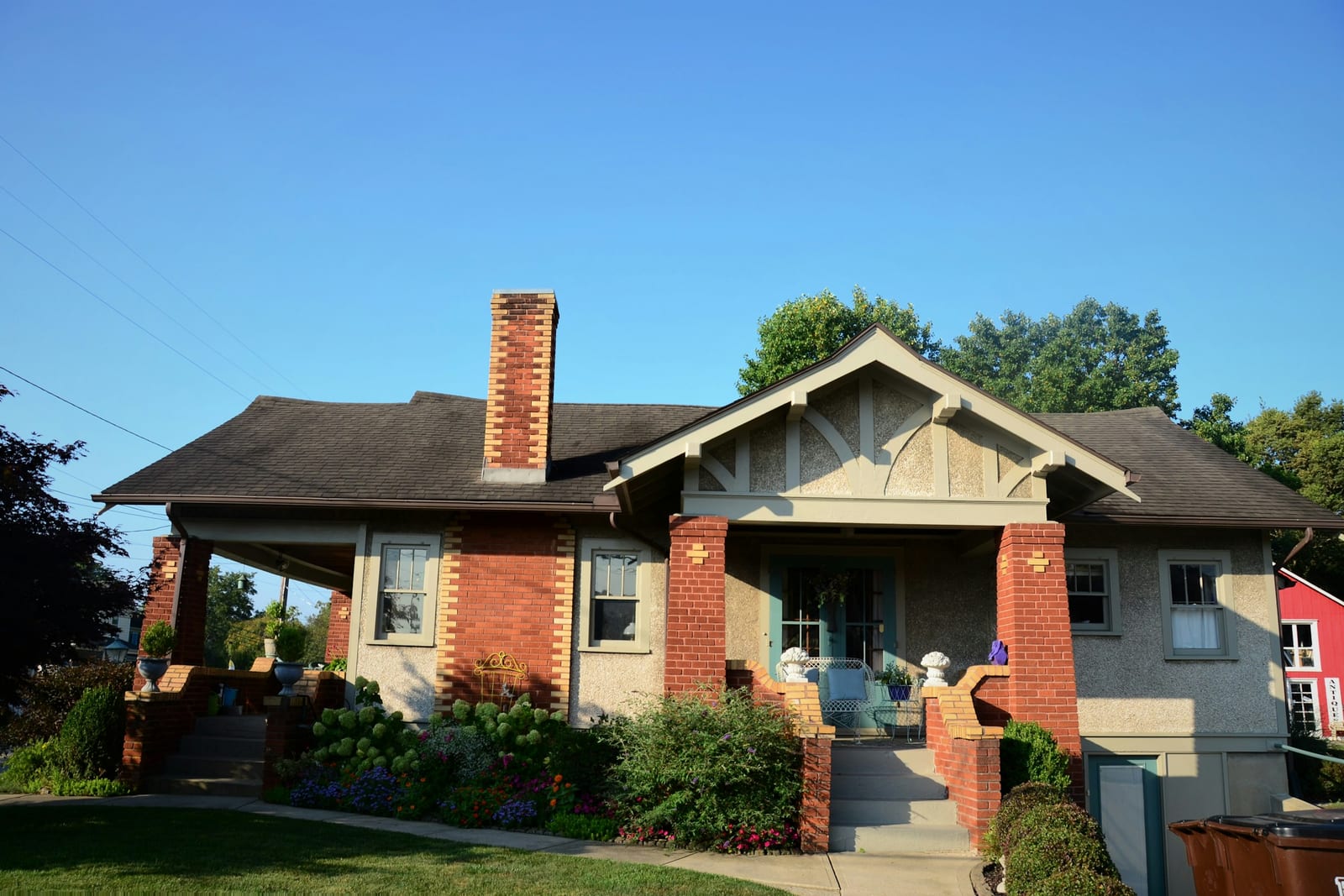
Fireplace Inspection in Bungalow Heaven
A fire burns cleanly when it gets the right air through the right openings.
Book a Clean-Burn Visit
Send a line about your fireplace or stove and how often you burn. We phone back from Bungalow Heaven with a time.
What's Included
Firebrick and mortar, the damper's fit and seal, glass doors and gaskets, the hearth extension, and clearances from the opening to wood trim and mantels all get checked. On prefab units we read the listing plate. Every finding goes in a written report with photos, ranked by urgency, and we note anything that makes the fire smoke into the room or out of the chimney, along with the likely fix.
The parts below the flue that decide how a fire burns
A chimney inspection follows the flue. A fireplace inspection stays down at the hearth, where most of the air control happens. We look at the firebrick and the mortar between it, the back and side walls for cracks or loose bricks, the hearth extension in front, and the damper: does it open fully, close tightly and sit square in its frame. On fireplaces with glass doors we check the door fit and the rope gaskets, and on prefabricated units we look at the metal panels and the listing plate so we know which parts the maker approved. Each of these affects how much air reaches the fire. Too little air and the fire smolders. Air leaking in where it should not and the fire is hard to calm down, so it burns hot and fast or goes out smoky.
We also check clearances. Wood mantels, trim and framing must sit a set distance from the firebox opening, and older homes in Bungalow Heaven sometimes have a mantel added later that sits too close. Heat that reaches wood slowly dries and darkens it, and that is a fire risk on its own. Every finding goes in a written report with photos, ranked by what needs action now and what can wait. The report also notes anything that bears on smoke: a smoke shelf full of debris, a damper that sticks half open, a crack at the back of the smoke chamber that leaks into the wall.
Smoke spilling into the room has a cause
If smoke rolls out under the lintel when you light a fire, the fireplace is telling you something. The common causes are a firebox opening too large for the flue, a cold flue that has not started to draw, a closed or broken damper, a negative-pressure house where a kitchen fan or tight windows pull air down the chimney, and a cap or flue partly blocked. Each has a different fix. A glass door or a smoke guard can reduce the opening. Warming the flue with a rolled newspaper before lighting helps on cold nights. Cracking a window near the fireplace can balance the pressure. An inspection tells us which cause applies, so you are not paying for the wrong repair.
For homes that burn only a few fires a year, an inspection every fall before the first fire is a sensible habit. It takes less time than a sweep and catches the things that build up while a fireplace sits idle: nests, fallen mortar, rust on a damper plate. If you are thinking about converting an open fireplace to an insert to cut smoke, the inspection also tells us whether the firebox and chimney can take one, and what size liner it would need. We are happy to talk that through on the visit, with no obligation to go ahead.
- Written Estimates
- Same-Day Service
- Upfront Pricing
- Fire Lit Together
More Services
Chimney Sweep
A full flue sweep that clears the creosote behind smoky fires and restores the draft, with the deposits explained so you know why.
Learn More →Chimney Inspection
An NFPA 211 inspection that finds the cracks and gaps where smoke escapes into the house, with photos of each finding.
Learn More →Chimney Repair
Repairs to liners, smoke chambers, crowns and mortar that keep smoke sealed inside the flue and water out of the masonry. Quoted in writing.
Learn More →Fireplace Inspection by city
Each city page covers the homes, the winter air and the ZIP codes we serve there, and how that shapes this service.
Fireplace Inspection in Pasadena
Bungalow Heaven is our own neighborhood, and the Craftsman blocks around it set the pattern for Pasadena work: a brick firebox built for wood, a flue that may never have been lined, and porches a few steps from the next house. We sweep those flues, read what comes out, and fit a sealed insert where an owner wants fires that keep their smoke out of the room.
View local serviceFireplace Inspection in Altadena
North of us, Altadena splits into two kinds of call. Houses that stood through the January 2025 Eaton Fire can hold ash and soot packed into the cap and the flue, and those need a clear flue and an inspection before anyone lights a fire. Families rebuilding get to pick the hearth from scratch, and we lay out how a sealed gas unit or a certified wood appliance compares with an open firebox.
View local serviceFireplace Inspection in San Marino
A San Marino house can run several flues up one stack: a living room fireplace, a library hearth, a second-floor bedroom. We sweep and read each flue separately, and for the fireplaces that sit cold most of the year we talk through a gas log set or a sealed gas insert.
View local serviceFireplace Inspection in La Canada Flintridge
Up the hill in La Canada Flintridge, a living room fireplace and a den wood stove under one roof is a common pairing, and tall chimneys on sloped lots can be slow to pull on a cold start. We keep the flues clear, size caps so the draft stays open, and service stove gaskets, baffles and catalysts so the stove keeps burning its own smoke.
View local serviceFireplace Inspection in Alhambra
Narrow Alhambra lots can put a chimney a few yards from the next bedroom window, so a clean fire here is partly good manners. Visits lean on dry wood, top-down lighting and insert options. Many older fireboxes are small and shallow, and that limits the insert or log set that will fit.
View local serviceFireplace Inspection in Montrose
Most Montrose houses are modest with one living room fireplace, and plenty of those fireboxes have never been lined. We sweep and inspect them, and if the owner wants a cleaner fire we measure whether a lined insert suits the opening and the flue above it.
View local service